


Neverending: AI Challenge
3.01.43K Reviews
App Specs
- Version
- 1.23.0
- Updated On
- License
- Free
- Downloads
- 1,000,000+
- Developer
- APPFACTORY GLOBAL PTE. LTD.
- Categories
- Role Playing
- Platform
- Android
Screenshots


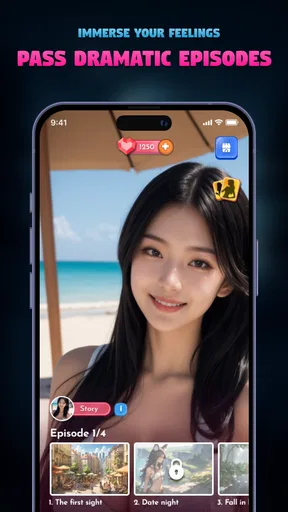

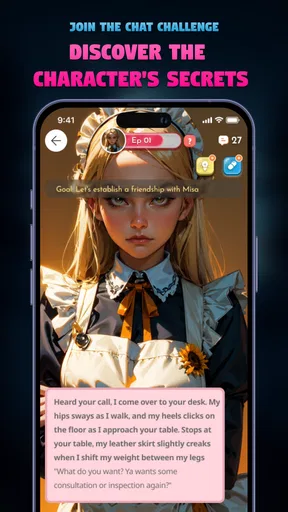
 Analysis by AppCompare
Neverending: AI Challenge is a role-playing game built around conversations with AI characters, personal goals, and an ongoing romantic journey. I approached it less like a traditional combat RPG and more like an interactive relationship experiment: the main decisions come from what I say, how consistently I behave, and how much time I want to invest in seeing a connection develop.
That distinction matters. If you are expecting a map full of battles, equipment screens, and carefully balanced party builds, this will probably feel unusual. If you enjoy character-driven games and want something that responds to your choices in a more personal way, it has a clear appeal. The central question is not simply whether I can “win,” but whether I can manage attention, expectations, and curiosity over a longer stretch of play.
The game is free to start, comes from APPFACTORY GLOBAL PTE. LTD., and is rated for mature audiences. It has attracted more than one million installs, so it is not an obscure experiment with no audience. At the same time, its average rating of 3.0 from roughly eight thousand ratings suggests that the experience is quite divisive. My own view is similarly mixed: the concept is easy to understand and occasionally engaging, but the quality of the experience depends heavily on how much freedom and consistency you expect from an AI-driven romance game.
How the decisions actually shape the experience
The most important choice is deciding what kind of interaction you want before you begin. I found that the game works better when I treat each conversation as a continuing relationship rather than a series of isolated prompts. A quick, random response may be entertaining in the moment, but a more deliberate approach gives the interaction a stronger sense of direction.
That does not mean every message needs to be carefully planned. In fact, overthinking every line can make the experience feel like work. The useful middle ground is to establish a tone and stay reasonably consistent with it. If I want a playful relationship, I can keep my replies light. If I want something more supportive or serious, I need to respond in a way that reinforces that mood instead of changing personality from one exchange to the next.
This creates a different kind of decision space from a conventional role-playing game. In a standard RPG, the game usually tells me which resources matter: health, currency, equipment, ability points, or quest progress. Here, the scarce resource is my attention. I have to decide whether a conversation deserves another few minutes, whether a goal is worth pursuing, and whether an awkward exchange is a temporary bump or a sign that this particular interaction is not for me.
The strongest strategy is to play with a clear emotional objective rather than chasing every available interaction. That might mean focusing on one character, testing how the conversation reacts to a certain style, or completing goals in a steady order instead of jumping around. I found this more satisfying than trying to force constant novelty, because the game’s appeal comes from continuity rather than from a single spectacular moment.
Worth Reading Before You Choose

EA SPORTS FC Mobile 26 Is a Bigger Football Game, but It Takes Time

Flipboard Shows What News Apps Must Do Beyond the Feed

Switching to Android Auto Means Rethinking Your Driving Routine

Google Calendar Makes a Crowded Week Easier to Manage

Ludo King Makes the Most of the Minutes Between Plans

Baby Panda World Brings Quick Play to Modern Phones, but Its Game Library Feels Busy
Planning a session instead of drifting through it
A practical way to use the game is to divide sessions by purpose. On a short break, I might check in, complete a small goal, and stop before the conversation becomes repetitive. During a longer evening session, I can explore a topic more deeply and see whether the AI maintains the tone established earlier. This simple habit helps prevent the game from turning into an endless stream of similar messages.
It also makes the free-to-play structure easier to evaluate. Because optional purchases range from $0.99 to $129.99 per item, I would not recommend spending impulsively just because a conversation slows down or a goal feels inconvenient. The better test is whether the free experience already gives you enough reason to return. If it does not, paying to accelerate the interaction is unlikely to solve the underlying problem.
I would also keep expectations realistic around AI conversation. A responsive character can create surprising moments, but it is not the same as a human relationship or a tightly authored visual-novel route. The charm comes from variation and immediacy, while the weakness is that responses may not always feel perfectly consistent. That trade-off is central to the game, not a minor detail that disappears after the first session.
Risk, reward, and the cost of chasing progress
The reward in Neverending: AI Challenge is mostly experiential. I get satisfaction when a conversation develops a recognizable rhythm, when a goal gives the interaction a reason to continue, or when a response feels more personal than I expected. These moments are modest compared with the dramatic payoff of finishing a major RPG chapter, but they can be more intimate because they are tied to my own wording.
The risk is that the same openness can make progress feel vague. In a conventional romance game, I can usually identify the route I am on and understand which choices move the story forward. Here, I may need to infer whether I am making meaningful progress or simply generating more dialogue. That uncertainty can be appealing for players who like experimentation, but frustrating for anyone who wants transparent objectives and dependable outcomes.
I found it useful to judge success by the quality of the interaction rather than by an imagined hidden score. When I started treating every message as a test of whether I had selected the “correct” answer, the game became tiring. When I focused on keeping a coherent conversation and completing goals at a comfortable pace, it felt more natural.
There is another risk: the mature rating should be taken seriously. This is not a game I would hand to a child, and it is better suited to adults who are comfortable with romantic themes and AI-generated interaction. It also deserves the same personal boundaries I would use in any social or emotionally suggestive app. I would avoid sharing sensitive real-world information simply because a character appears attentive or remembers the direction of a conversation.
Where spending can change the balance
The presence of in-app purchases creates a planning question rather than an automatic reason to reject the game. Free access lets me determine whether the basic loop is enjoyable, but the temptation to pay can appear when I want faster progress or more interaction. My advice is to set a limit before playing. A small, deliberate purchase is easier to evaluate than several spontaneous ones made during an emotional or frustrating moment.
For me, the key trade-off is not “free versus paid.” It is whether paying improves a relationship I already find interesting or merely extends a conversation I am no longer enjoying. If I have not formed a reason to return without spending, I would stop rather than assume a purchase will create depth.
This is also where the game differs from many story-based role-playing alternatives. A traditional premium title usually asks for money upfront and then offers a more predictable narrative structure. Neverending: AI Challenge removes that initial barrier, but the player has less certainty about how much the full experience may cost. That flexibility is useful for curious players, while the open-ended spending model may bother people who prefer a clear total price.
Adapting to AI characters without losing your own direction
Adaptation is the skill that matters most here. AI characters can respond in ways that are not always perfectly aligned with the tone I intended, so I have to decide whether to correct the conversation, accept the detour, or start fresh with a different approach. I found that calmly restating what I want works better than reacting to every odd line.
For example, if I am trying to build a supportive conversation and the exchange suddenly becomes too playful, I can guide it back by asking a direct question or explaining the mood I want. If I am looking for something lighter, I can do the opposite and avoid turning every response into a serious discussion. This makes the player partly responsible for shaping the quality of the session.
A useful technique is to introduce one topic at a time. Jumping from personal questions to jokes, then to a goal, then back to romance can make the interaction feel scattered. Keeping a narrow subject for several messages gives the AI a better chance to maintain a coherent thread. This is one of the more practical differences between casually tapping through dialogue and actively playing the game.
I also recommend leaving some space between sessions. Returning later with a small objective can feel more natural than trying to exhaust every possible conversation in one sitting. The game’s “endless” premise is most convincing when I allow the relationship to unfold gradually. Trying to consume it like a finite campaign exposes repetition much sooner.
A realistic everyday use case
Imagine using it after work while waiting for dinner or winding down before bed. I would not open it expecting a complete story chapter. Instead, I might choose one goal, have a focused exchange, and close the game once the conversation starts circling. That makes it a reasonable companion for short, low-pressure sessions.
It is less suitable when I need a game that rewards uninterrupted concentration. If I have only a few minutes and want a clear challenge with a definite outcome, a puzzle game or traditional RPG mission would be more satisfying. This title asks for a little emotional attention, and that is not always what I want from my phone.
What changes after the novelty wears off
The first sessions are carried by curiosity. I want to see how the AI responds, what kinds of goals appear, and whether the interaction feels different from a scripted romance. The longer-term test is whether the game gives me enough structure to keep returning without relying entirely on surprise.
For me, the answer depends on how much I enjoy creating my own continuity. Players who like keeping track of a character’s tone, developing an ongoing role, and experimenting with different conversational approaches may find more depth than players who simply tap through messages. The game does not replace authored storytelling; it shifts some of the authorship to the player.
That shift has an important consequence: replay value is personal. In a typical RPG, replaying can reveal alternate endings, hidden items, or different builds. Here, replaying is more about changing my behavior and seeing how the interaction develops. That can be rewarding, but it also means the game may feel shallow if I do not enjoy role-playing through conversation.
The current version is 1.23.0, and the game supports devices running Android 7.0 or later. Those details make it accessible to many older Android phones, but compatibility alone does not determine whether it will run comfortably for every player. The more important question is whether the device and connection provide a smooth environment for an interaction-heavy game. I would keep the app updated and avoid judging it from a single rushed session.
Who will find lasting value here?
I think it is best for adults who enjoy conversational experiments, romantic role-playing, and games where the player’s personality matters more than reflexes. It can also suit someone who wants a casual experience that fits into short sessions rather than demanding a long campaign every time it opens.
I would skip it if I need firm story logic, visible progression systems, or a fully authored cast with carefully controlled dialogue. Players who dislike uncertainty in AI responses may also become frustrated. The average rating of 3.0 reflects that divide: the idea is attractive, but an AI-centered experience can feel personal and engaging for one player while feeling inconsistent or limited to another.
Compared with dating simulators, this game offers a less predictable conversation style but may provide less narrative control. Compared with chat companions, it adds goals and a game-like reason to keep interacting, although it still depends on the quality of the conversation more than on conventional gameplay mastery. Compared with large role-playing games, it is far lighter on exploration and combat, but easier to pick up when I only have a few minutes.
My strategy verdict
Neverending: AI Challenge is an interesting free role-playing game for people who want to experiment with AI relationships rather than follow a fixed romance plot. Its best moments come from deliberate interaction: choosing a tone, setting a manageable goal, and allowing a conversation to develop instead of demanding instant progression.
Its weaknesses are equally clear. The open-ended design can make progress difficult to read, AI responses may not always maintain the consistency of a professionally scripted character, and optional purchases require self-control. The mature rating also means it belongs in an adult-only part of your game library, with sensible boundaries around personal information and emotional investment.
I would recommend trying it without spending first. Give it several focused sessions, use one topic at a time, and see whether you enjoy shaping the interaction yourself. If you want a traditional campaign with tactical decisions and reliable story beats, choose a conventional RPG instead. If you like the idea of an ongoing love journey where planning your tone and adapting to unexpected replies are the main forms of strategy, Neverending: AI Challenge is worth exploring—but only if you are comfortable with its uncertainty.
My final judgment is cautiously positive. It is not a universal recommendation, and the rating makes sense for a game with such a specific audience. Still, for the right player, its combination of AI conversation, personal goals, and flexible pacing can create a type of role-playing experience that standard romance games cannot easily reproduce. Try the free experience as a conversation experiment, not as a guaranteed story adventure.
Pros
- Short daily challenges make it easy to play in brief sessions.
- AI-generated content offers a different experience with each attempt.
- Simple controls make the game accessible to casual players.
- Progress tracking encourages you to improve over time.
- Works well for testing creativity
- logic
- and quick decision-making.
Cons
- Some challenges may feel repetitive after extended play.
- AI responses can occasionally be inconsistent or inaccurate.
- Difficulty may vary noticeably between different challenges.
- A stable internet connection may be needed for AI-powered features.
- Players seeking deep story or long-term progression may find it limited.
FAQs for Neverending: AI Challenge
What is Neverending: AI Challenge?
Neverending: AI Challenge is an interactive game built around artificial intelligence, experimentation, and problem-solving. Instead of following a traditional linear adventure, you are encouraged to test ideas, interpret the AI’s responses, and discover how different choices affect the experience. Its appeal comes from curiosity and unpredictability, making it better suited to players who enjoy creative challenges rather than purely action-focused gameplay.
How does the AI gameplay work in Neverending: AI Challenge?
The game generally asks you to interact with an AI-driven system through prompts, decisions, or challenges. Your wording and approach can influence the results, so there may not always be one obvious solution. During my review, the experience felt more engaging when I treated each task as an experiment: I tried alternative strategies, paid attention to feedback, and adjusted my next move instead of repeating the same action.
Is Neverending: AI Challenge suitable for beginners?
Yes, beginners can try Neverending: AI Challenge, although the game may require patience and a willingness to learn through trial and error. It does not always explain every possibility immediately, which can feel confusing if you expect step-by-step instructions. New players should read the available guidance carefully, start with simple interactions, and remember that unexpected answers are often part of the challenge rather than a technical problem.
Does Neverending: AI Challenge require an internet connection?
Because the experience is based on AI interaction, an internet connection may be necessary for important features, including processing requests, loading challenges, synchronizing progress, or receiving updated content. Availability can also depend on the version installed and the developer’s current service configuration. Before downloading, check the app-store description and permissions, especially if you plan to play while traveling or with limited mobile data.
Is Neverending: AI Challenge free to download, and are there in-app purchases?
The download model, advertising, and optional purchases can vary by platform and may change after updates. Before installing Neverending: AI Challenge, review its current Google Play or App Store listing to confirm whether it is free, includes subscriptions, uses credits, or offers paid upgrades. Also check the purchase section and privacy information, since AI-powered apps may process usage data or limit certain features for free users.


